Ultra marathon training: 20 weeks for my first ultra, and what I'd change
I trained for 20 weeks for a 53-mile first ultra, with a half marathon, a marathon, a fell race and a hilly marathon as training runs, and withdrew at mile 36 on medical advice. This is how those weeks went, and what I'd change.
My first ultra was the 53-mile Race to the King in 2017. Before it I had run marathons, and never anything further.
How many weeks do you need to train for an ultra marathon?
Race organisers publish their own answers. Threshold Trail Series, which organises Race to the King, makes all of its training plans sixteen weeks long, in four blocks of four weeks, for runners and walkers at its events from 30km to 100km. So for a 50k, Threshold's answer is the same sixteen weeks.
Its beginner plans say what you should have done first. The 50km plan is for runners who exercise 3 to 4 times a week and have run at least one 10k; the 80km and 100km plans ask for 3 to 4 times a week and at least one half marathon.
Source: Threshold Trail Series, training plans, checked
I gave myself 20 weeks.
Can a beginner run an ultra marathon?
Organisers plan for first-timers: Threshold's 50km beginner plan is "designed to help you take on your first 50km run". Whether 53 miles should be anyone's first ultra is a different question.
In 2017 I wrote that most people's first ultra is a 50km, only a little further than a marathon, and then entered a 53-mile race. I don't do running the easy way. I ran a marathon before I had run a half, too.
My 20 weeks, from the diary
I kept a diary of the training, and it shows how the weeks went.
My plan started each week on a Monday. I moved mine to start on Sunday with the long run: a good one sets you up for the week, and after a bad one you have all week to make up the miles, instead of chasing distance on the last day.
The first weeks felt easy, because I could already run, but I stuck to the mileage. Cross-training meant 30 minutes on a gym bike, which bored me stiff, or a swim. I learned two small lessons early. A rest day is a rest day for a reason (I spent one walking to hit a calorie target on my watch, and my legs knew about it). And swimming for nearly an hour when the plan said 30 minutes knocked the rest of that week's running.
Then the long runs became races. I preferred races to training runs for getting the distance in: once I'd started a race I had never quit, while a training run could get cut short when I was tired.
- Retford Half Marathon, March. The plan said a steady 6 miles. I ran steadily with others to 10 miles, then let go, and finished in just over 2:04, about five minutes faster than my old best.
- Manchester Marathon, April. The plan said 10 miles. I ran the marathon on 25 minutes running and 5 walking and took over 13 minutes off my best (the whole run is in jeffing). For the next few days I listened to my body for once and rested when my legs needed it.
- Nidderdale 20-mile fell race. A 20-mile training run became a race: I found a fell race, off-road like Race to the King. I missed a turn at about mile 14, ran 24 miles and finished third to last.
- Huddersfield Marathon, about five weeks before the big day. I needed 26.2 miles and entered it without much thought. On the start line I was told it's one of the toughest marathons in the UK: steep up and down for the first 12-ish miles, hail at one point, steps to climb at mile 22 and the last 4 miles back uphill. It's the slowest and toughest marathon I have ever done.
Train on ground like the race
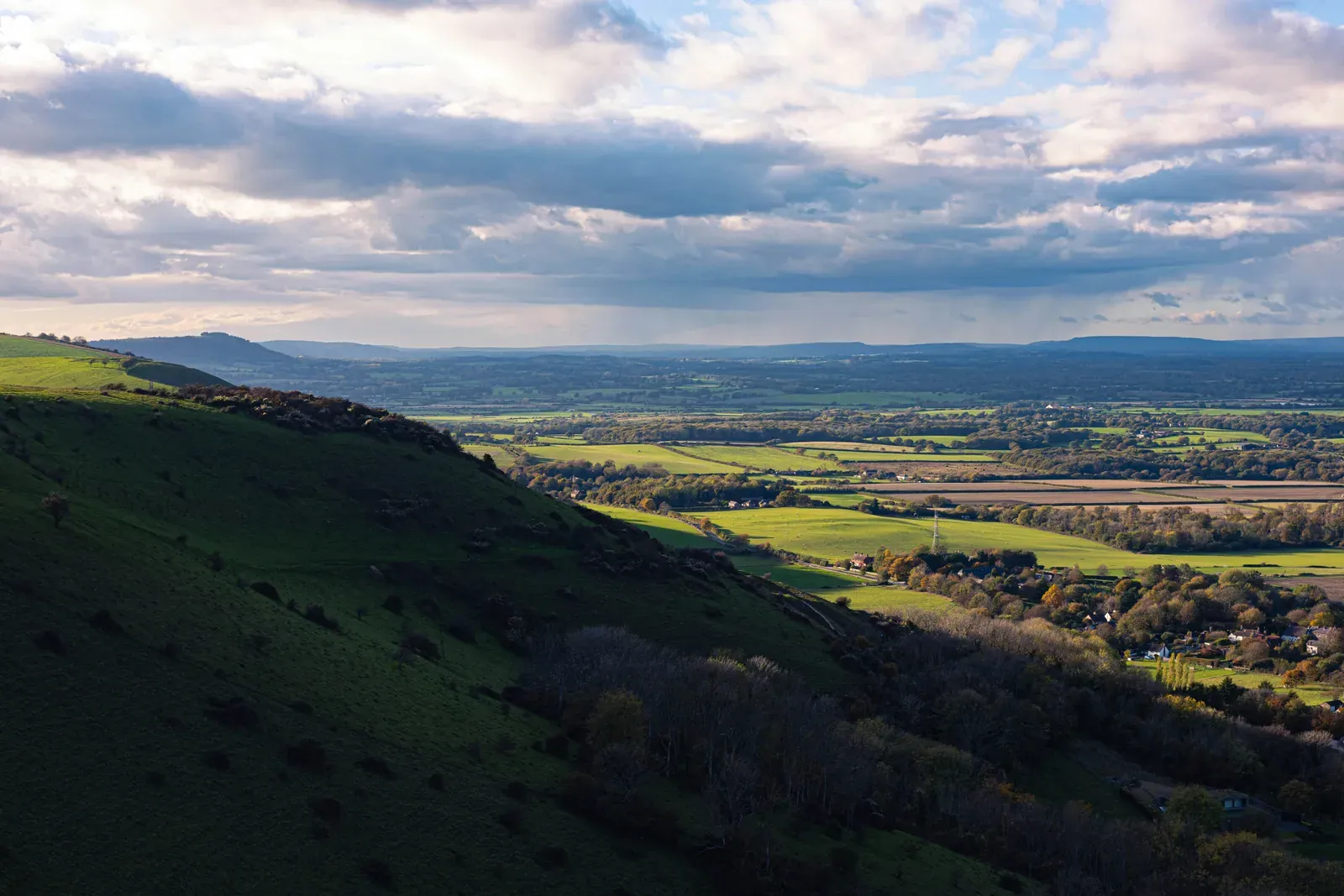
I hadn't researched the course. Where I trained, we had to go looking for hills, and the ones we found weren't long or steep. Race to the King crossed the South Downs, and the aid station at mile 30 sat at the top of one of the steepest hills I have ever walked up (and I've been up Ben Nevis, Snowdon and Scafell Pike). My race ended at mile 36, on medical advice.
If I ran it again I'd scope the course first, in person if I could and by studying the route if not, and I'd take my long runs to the hills of the Peak District. My Race to the King story has the day itself, and trail running for beginners has the other road-to-trail lessons.
Time on feet
For Endure 24 Leeds in 2020, a 24-hour race, I planned by time as much as by distance. The plan ran for 25 weeks, and I wrote that nine-tenths of it was about time on feet and distance covered.
It had short runs to build speed, medium runs on Thursday nights, long runs at the weekend that were all about time on feet, and official races as training runs to test speed, strategy and eating. The weekly total climbed from 24 miles in the first week to 73 at the peak, with back-to-back weekend runs of 25 and 30 miles, before two easier weeks and the race. I also planned to practise eating and drinking on the run, to find out what my body liked.
The 2020 race didn't happen, so the plan never met its race day.
When I reviewed my 2018 race at the end of 2020, I planned two more changes: long runs on Saturday nights, from about 10pm until 1 or 2 in the morning, to get used to running tired in the dark, and walks of 20 to 24 hours for time on my feet. Endure 24 Leeds has that race, and running in the dark has the night laps.
What I'd change in my training
Four things, in the order they would have helped:
- Scope the course. In person if possible, or by studying the route, then train on ground like it.
- Walk the uphills and run the flats. I took the timer that had worked at Manchester, 25 minutes running and 5 walking, to a hilly 53-mile race.
- Keep aid-station stops short. At halfway I sat down, got comfy and got chatting, and it was hard to get going again. Next time I'd grab some food and go.
- Practise eating on the move. I'd learned at the London Marathon to train on the foods I would race on, so the food at Race to the King was fine. After Endure 24 Leeds in 2018 my rule became: eat while moving, and keep breaks to two or three minutes.
And write an honest review after every big race. I didn't after Race to the King, so I made the same mistakes at Endure 24 Leeds in 2018. My DNF guide has all three of my unfinished races, and the ultra marathon kit list covers what races make you carry. I'd pack fresh socks for after halfway, too.