
Couch to marathon in under a year: what it took
It can be done in under a year. I couldn't run a kilometre in early January 2013, and that October I ran the Mablethorpe Marathon, before I had ever run a half marathon.
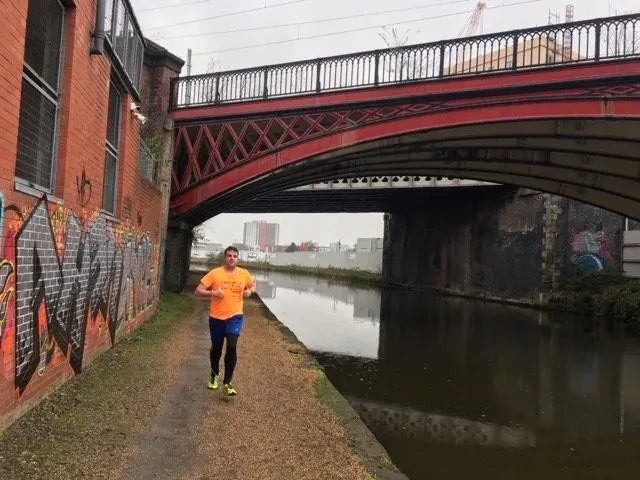
This is how my first year of running went, month by month, and what I'd tell anyone starting from where I did.
Can you go from couch to marathon in a year?
I did, in about ten months, and I was no natural runner. I started in early January 2013 and ran the Mablethorpe Marathon that October. I did a marathon before I did a half marathon. It's not the usual order, and it worked for me.
How long does couch to marathon take?
About ten months from my first struggling run to the start line, with five months of proper marathon training at the end of it. If you're training for a marathon from scratch, treat that as one runner's timeline rather than a promise: everyone starts from a different place.
If you're starting from nothing, start smaller than a marathon. The NHS Couch to 5K plan is free and built for absolute beginners: three runs a week with rest days between, starting with 1-minute runs and 90 seconds of walking, until you can run 5K or 30 minutes without stopping in 9 weeks or longer. The NHS also says to speak to your GP first if you haven't exercised for some time or have a medical condition.
Sources: NHS, Couch to 5K; NHS, physical activity guidelines, checked
Couch to 5K mixes running and walking, and so did my fastest marathon: my jeffing guide covers run-walk.
The first weeks
Slow. I had to start gently, because a kilometre was hard work. By February I'd set myself a target of 5km every day for the month, and by the end of it my time was down to about 33 minutes. That wasn't fast, but a month earlier I couldn't run a kilometre, so I was happy.
In February or March I turned up to my first parkrun. It was very muddy, I got under 30 minutes, and I was buzzing. I kept going back. An older runner kept giving me tips as I passed him, then passed me again by the third lap, because I always set off too fast. The week I finally passed him, he told me to come down to the local running club and try it for a few weeks.
How a marathon became the plan
About two weeks after I joined the club, I heard that same club-mate talking about the Mablethorpe Marathon, and I decided that if he could do it, I had no excuse. The furthest I had run was about six or seven miles with the club, and the furthest I had raced was 10k. In my head a marathon was roughly four 10ks, so with a bit of training I could do it.
We had five months to train. I did it, and I got a little addicted to marathons.
The kit that mattered
Shoes first. We don't sell running shoes, so get a pair that supports your feet from a running shop; the NHS Couch to 5K page says the same about shoes that support your feet. After that, the kit that matters for a winter start and long training runs is short:
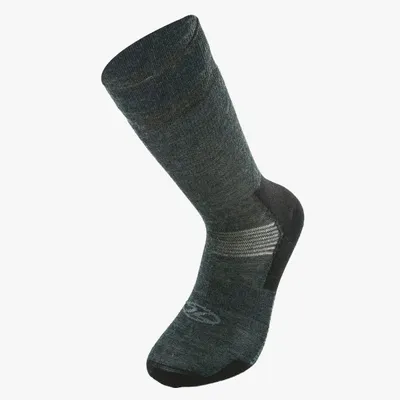
- Socks that don't rub over long miles. The Wool Crew Sock is a merino blend with no cotton, an arch brace and flat toe seams (from its listing).
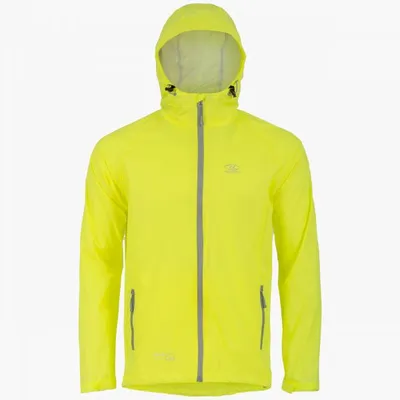
- Something for the rain. The Stow and Go Pack Away Rain Jacket has taped seams and a hood, and packs into its own stuff sack.
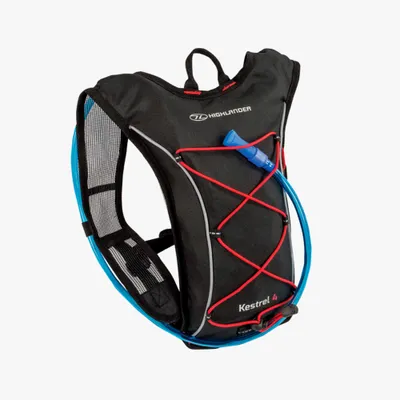
- A way to carry water on the long runs. The Kestrel Hydration Backpack holds a 2 litre bladder and 4 litres of kit.
- Warmth for a January start. The Highlander Polar Fleece Neck Warmer pulls up over your ears or nose.
The packs and bladders are on our hydration packs page, and the jacket and socks are with our waterproofs and socks.
What I would do differently
I'd start slower. At parkrun I always set off too fast, and the older runner who kept passing me on the third lap was the proof. When I went on to ultras I wrote down four lessons: scope the course before you run it, walk the uphills and run the flats, keep aid-station stops short, and carry fresh socks.
My next step after marathons was an ultra. If that's where you're heading too, my ultra marathon training guide covers how I trained for one, and the ultra marathon kit list covers what races make you carry.
Kit from this guide
 Wool Crew Sock
£8.47
In stock
 Stow and Go Pack Away Rain Jacket
£36.97
In stock
 Kestrel Hydration Backpack
£17.47
In stock
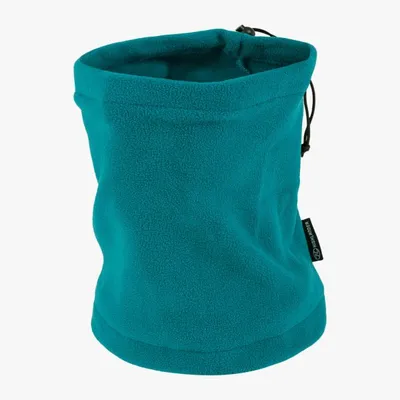 Highlander Polar Fleece Neck Warmer
£4.97
In stock