Running in hot weather: what 24 hours at 31°C taught me
Run in the cooler hours, slow down, drink when you're thirsty without overdoing it, and know the signs of heat exhaustion. I ran Endure 24 Leeds in 2018 through a day of 31 to 32 degrees with very little shade, and for a long time afterwards the heat was my excuse.
In England we don't normally get long, hot summers, so a hot race day can catch you out. The official advice for running in the heat is short, and most of it is about when you run and how hard.
Is it safe to run in hot weather?
It can be, if you change when and how you run. UKHSA advises planning exercise for the cooler times of day, such as the early morning or the evening, and avoiding direct sunlight, especially between 11am and 3pm, when UV levels are highest. It lists people who are physically active and spend a lot of time outside, such as runners, among those at higher risk of becoming seriously unwell in hot weather, and the NHS names runners too.
The NHS heatwave advice is to stay in the shade between 11am and 3pm and avoid exercise or activity that makes you hotter. London Marathon Events says medical experts advise runners to reduce their pace on hot days.
Sources: UKHSA, Beat the heat: staying safe in hot weather; NHS, heatwave: how to cope in hot weather; London Marathon Events, how to run in the heat, checked
What temperature is too hot to run in?
None of those pages gives a single temperature that's too hot for running. Their advice is about timing, pace and knowing the warning signs.
How much should you drink when it's hot?
London Marathon Events' medical advice is short: "Drink to thirst, not more. Too much water can cause dangerous hyponatraemia." It explains hyponatraemia as water intoxication, which can lead to fits and even death. It adds that you'll need more in the heat and less in cool conditions, and its heat guide says to drink more if you're thirsty or sweating a lot, without overdoing it. If you use electrolyte drinks at an event, try them in training first.
Sources: London Marathon Events, medical advice; London Marathon Events, how to run in the heat, checked
Professor Sanjay Sharma, London Marathon Events' medical director, says needs vary with your build, speed and the weather: faster runners may need as much as a litre an hour on a warm day, while slower runners need less and should not drink more than 500ml an hour. That's his advice for a marathon. If you'll need to drink during an event, he suggests practising drinking on the run in training.
Source: London Marathon Events, hydration guide, checked
Our hydration packs and bladders carry water on longer runs.
Heat exhaustion and heatstroke: the signs
The NHS lists the symptoms of heat exhaustion as tiredness, dizziness, headache, feeling or being sick, excessive sweating and pale, clammy skin, cramps in the arms, legs and stomach, a high temperature, being very thirsty and feeling irritable. Someone with heat exhaustion needs cooling down and fluids, and should start to feel better within 30 minutes.
London Marathon Events gives early signs to watch for on a run: headaches, feeling confused or cold, and not sweating. If you have any of them, slow down or walk to a cool place and get help, or at an event, go to the nearest first aid station on the course.
The NHS says to call 999 now if you or someone else has signs of heatstroke, including:
- still being unwell after 30 minutes of resting in a cool place, being cooled and drinking fluids
- a very high temperature
- hot skin that's not sweating and might look red (this can be harder to see on brown or black skin)
- a fast heartbeat
- fast breathing or shortness of breath
- confusion and lack of coordination
- a seizure or fit
- loss of consciousness
It also says not to drive yourself to A&E.
Sources: NHS, heat exhaustion and heatstroke; London Marathon Events, how to run in the heat, checked
24 hours at 31 degrees: Endure 24 Leeds
I ran Endure 24 Leeds as a solo runner on 30 June and 1 July 2018, on a lap of 5 miles. It was roasting, 31 to 32 degrees with very little shade, and it had been dry for weeks, so the grass course was solid, with no give in it.
The Met Office called June 2018 "a very dry month for much of the UK", and on the Saturday the race started it reported temperatures of at least 30 Celsius in all four UK nations over the previous few days. It gives no figure for the course itself, so the 31 to 32 degrees is my own account.
Sources: Met Office, June 2018 statistics; Met Office, heatwave continues into July, checked
There was a drink station at the start and finish and another about 3 miles in. I couldn't drink fast enough, or so I thought, and I might have overdone it in places. Friends from my running club kindly kept filling my drinks up for me.
I ran 55 miles against an aim of 100, and for a long time I said the heat was the main reason. It was a factor, but blaming it alone wasn't honest: I was taking the easy way out. Next time I'd bring a few more caps to change into, keep cool where I can and stop thinking about the heat.
The whole race is in Endure 24 Leeds.
What to wear and carry in the heat
London Marathon Events suggests light-coloured clothes that don't absorb heat from the sun, lightweight, breathable fabrics with lots of holes in them, and a thin white racing cap to keep the sun off your face. The NHS says light-coloured, loose clothing. If you're out between 11am and 3pm, UKHSA adds sunscreen, applied liberally and reapplied often (we don't sell sunscreen).
Sources: London Marathon Events, how to run in the heat; NHS, heat exhaustion and heatstroke; UKHSA, Beat the heat: staying safe in hot weather, checked
Our Highlander Trekker Cap is a lightweight summer cap: vented, with a reflective print, and it folds into its own pouch (all from its listing). For water you can reach without stopping, the Kestrel Hydration Backpack holds a 2-litre bladder and 4 litres of kit (from its listing), and the rest of our hydration packs and bladders are on one page.
Questions about running in the heat
What is the 11am rule during the UK heatwave?
It's the advice to keep out of the sun between 11am and 3pm. The NHS says to stay in the shade then, and UKHSA says to avoid direct sunlight, especially between 11am and 3pm, when UV levels are highest.
Should I run in a heatwave?
The NHS heatwave advice is to avoid exercise or activity that makes you hotter. If you do go out, UKHSA advises planning it for the early morning or the evening, when it's cooler.
Sources: NHS, heatwave: how to cope in hot weather; UKHSA, Beat the heat: staying safe in hot weather, checked
Kit from this guide
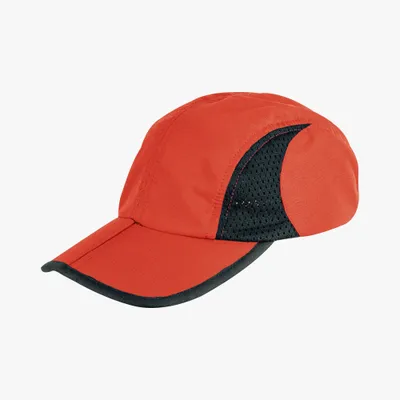 Highlander Trekker Cap with Pouch
£9.47
In stock
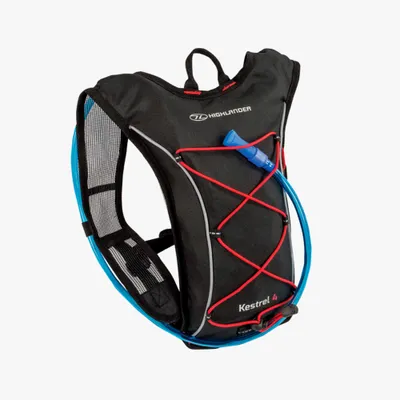 Kestrel Hydration Backpack
£17.47
In stock